
42 Years since...
Alice on my mind. *Distressing content about babyloss*

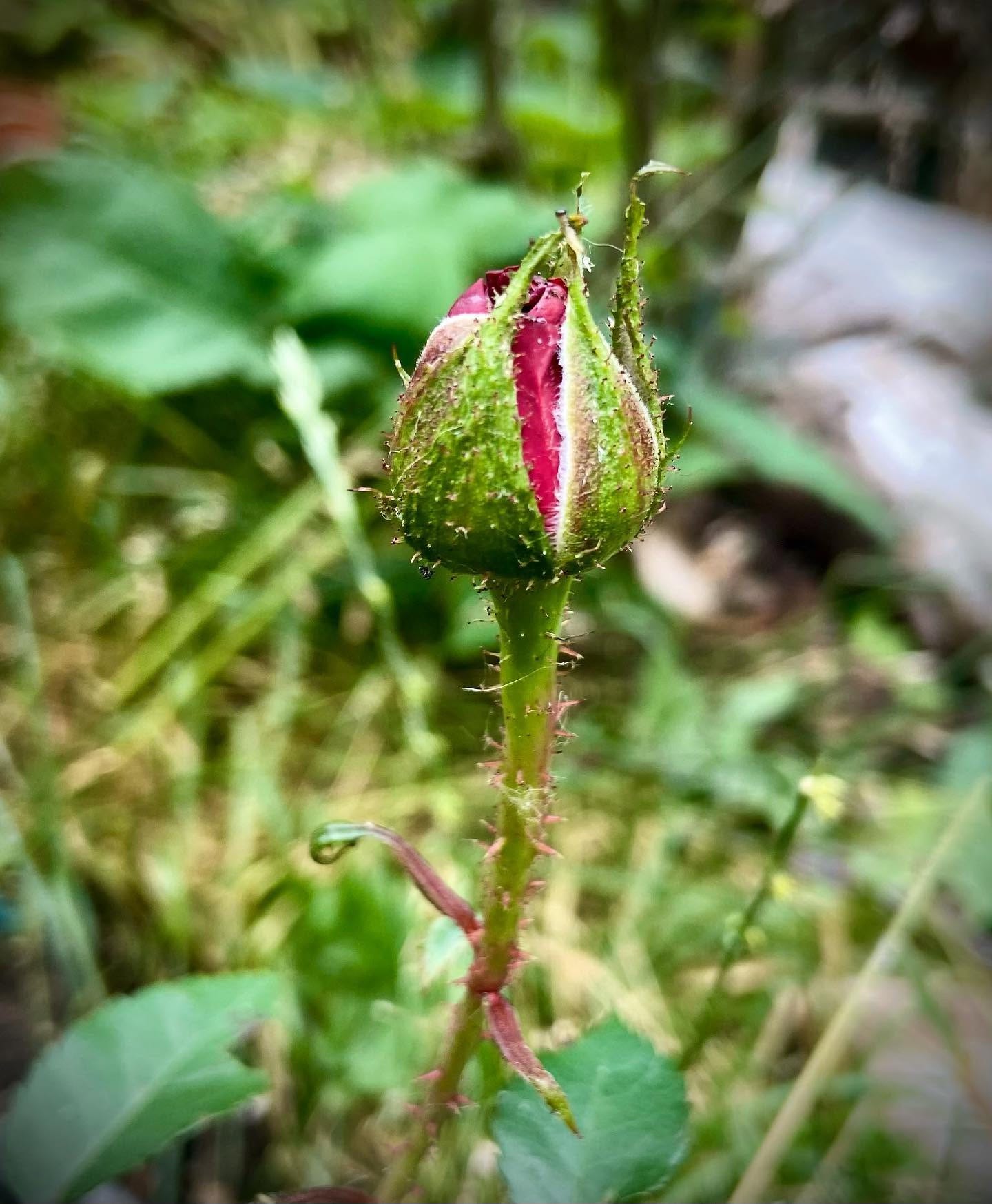
In memory of Alice Hannah Wilson Jones. 30/06/84. #babylossawareness #stillbirth #alwaysremember
Forty-two years since I climbed onto a bus with red-raw eyes, trying to hold off the sobs threatening to wrack my body in two.
The body that still cradled my baby daughter inside.
“Cheer up, it might never happen,” said the bus driver.
“It already has,” I said with a clenched jaw.
Forty-two years since I ‘knew’ before the ultrasound the doctor had ordered when I attended the clinic the day before. He hadn’t been able to hear the heartbeat, but pretended he had to stop my panic, numbness creeping up my arms and pooling in a cold spot in my chest. I ‘knew’ the evening I watched Pamela Stephenson on television talking about breastfeeding her baby, Daisy. I had a sudden, deep knowledge. I was never going to be doing that.
I realized I hadn’t felt my baby move for a couple of days, but the people around me kept saying reassuring things like it’s common around the six-month mark as the baby adjusts to its more cramped space. It’s not. Get checked out immediately if this happens!
Forty-two years since I went to my parentcraft class the next day, before the appointment the GP had made for me. Another mother expressed concern at her baby’s reduced movements, and everyone reassured her. I said my baby had stopped moving, too. Two women gave me a lift to the hospital. At the scan the radiographer said, “I’ll just be a moment,” and left the room. I tried to unfurl my clenched fists. She returned with a senior doctor who took up the probe and rolled it over my stomach.
“I’m sorry, Mrs Wilson. There’s no sign of life down there.”
Forty-two years since a nurse took me into a small room containing a table and two chairs. Someone brought me a cup of tea. Sweet, they said, for the shock. I sipped it between sobs. Alone, twenty-one years old.
“Is there anyone I can ring for you?” I gave the nurse the telephone number of my communal house on the banks of the River Humber. She called it and handed me the phone. I spoke to my boyfriend.
“How are you getting home?” the nurse asked.
“On the bus.” Two buses, in fact, the first from the stop outside the hospital and the second a coach from a stand in the centre of town.
“Smile,” said the bus driver as I climbed the steps and handed over my bus fare. “It might never happen.”
“It already has.”
Forty-two years since there was a welcoming committee at the end of the hour-long bus journey back to the house on the bank of an estuary. My boyfriend stood in the doorway as the bus juddered to a halt and I climbed down. Taking my hand, he led me through the living room into my bedroom that I’d recently decorated, two walls lilac and two yellow. Half a ‘me room’ and half a ‘baby room’, as I’d told my mum in a letter which she didn’t answer. My boyfriend sat on the edge of the bed with me while I talked and talked about our baby, how it would have been to be her parents. Not so long ago, he’d pushed the carrycot pram I’d saved to buy through the house when it was delivered: for the first time appearing to come around to the idea of becoming a father. “You’ll use it against me,” he’d said at the beginning of the pregnancy. The burgundy corduroy pram stood in the corner of the bedroom now, empty, as it would forever be.
Forty-two years since I woke repeatedly in the night to the glow of the dim blue lamps on the walls of my room. Remembering afresh every time.
I had to go back to the GP the following day with the sealed brown envelope from the ultrasound department. One of my housemates helped me steam it open and read the contents. Medical jargon, but — the baby was dead.
Forty-two years since my last walk along the clifftop as a pregnant mother, the sky tumbled with clouds and a raucous orchestra of seagull music to accompany the soft tread of our footsteps on a clay path: mine, my boyfriend’s and my sister’s. Only a week previously, my boyfriend’s parents had visited, acknowledging the existence of the baby for the first time. His mother brought me a hand-knitted shawl. “I would have liked a little girl,” she said a month later.
Forty-two years since I laboured alone through the night, the last bus having carried my boyfriend home. A cleaner entered the room. “Is it your first baby?”
“Yes, but the baby’s dead,” I felt guilty for whatever feelings I’d caused her.
Forty-two years since the thirtieth of June, nineteen-eighty-four, when Alice was born sleeping. Wrapped tightly in green hospital fabric – one miniature hand peeping out next to her face – and placed in my shaking arms for the merest of minutes before they took her away. The flash on the Polaroid camera they used to take a photograph of her – dwarfed by the transparent baby crib – didn’t work, causing the image to be dim and her features indistinguishable.
Years later, by then the mother of three boys and soon to give birth to my younger daughter, I contacted the hospital to ask if there was anything they could do to enhance the photo of my first baby. There wasn’t, but they sent me a bereavement kit and invited me to a service for parents of baby loss. I still haven’t attended one. I’ve still not explored the cemetery next to the former maternity hospital grounds to find the communal grave where her remains must have been placed, but I plan to, one day.
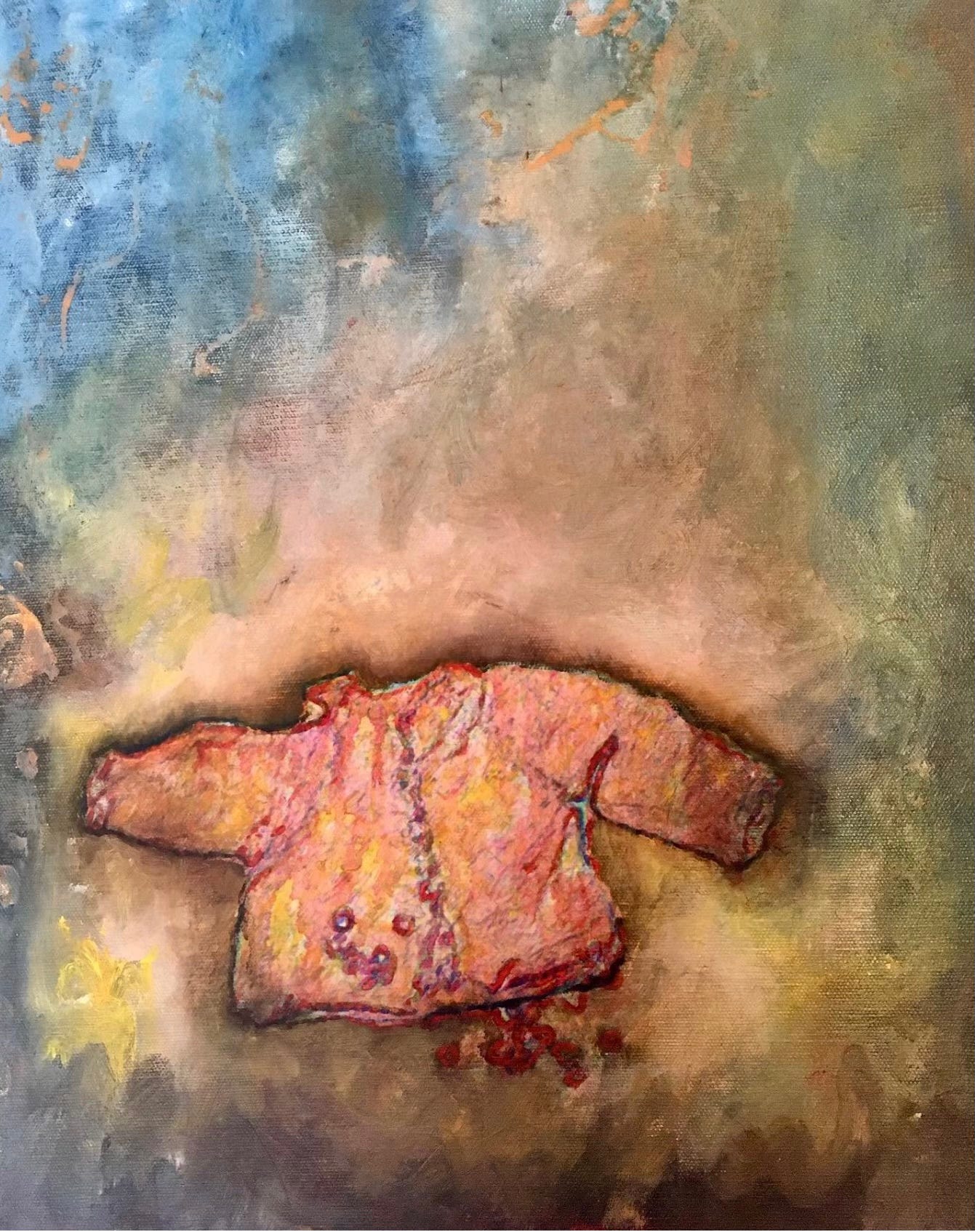
The Pink Cardigan. A painting I made in memory of Alice Hannah Wilson-Jones.
Forty-two years later, while her younger siblings have become adults and are having children themselves, Alice Hannah will forever be ‘My Baby’
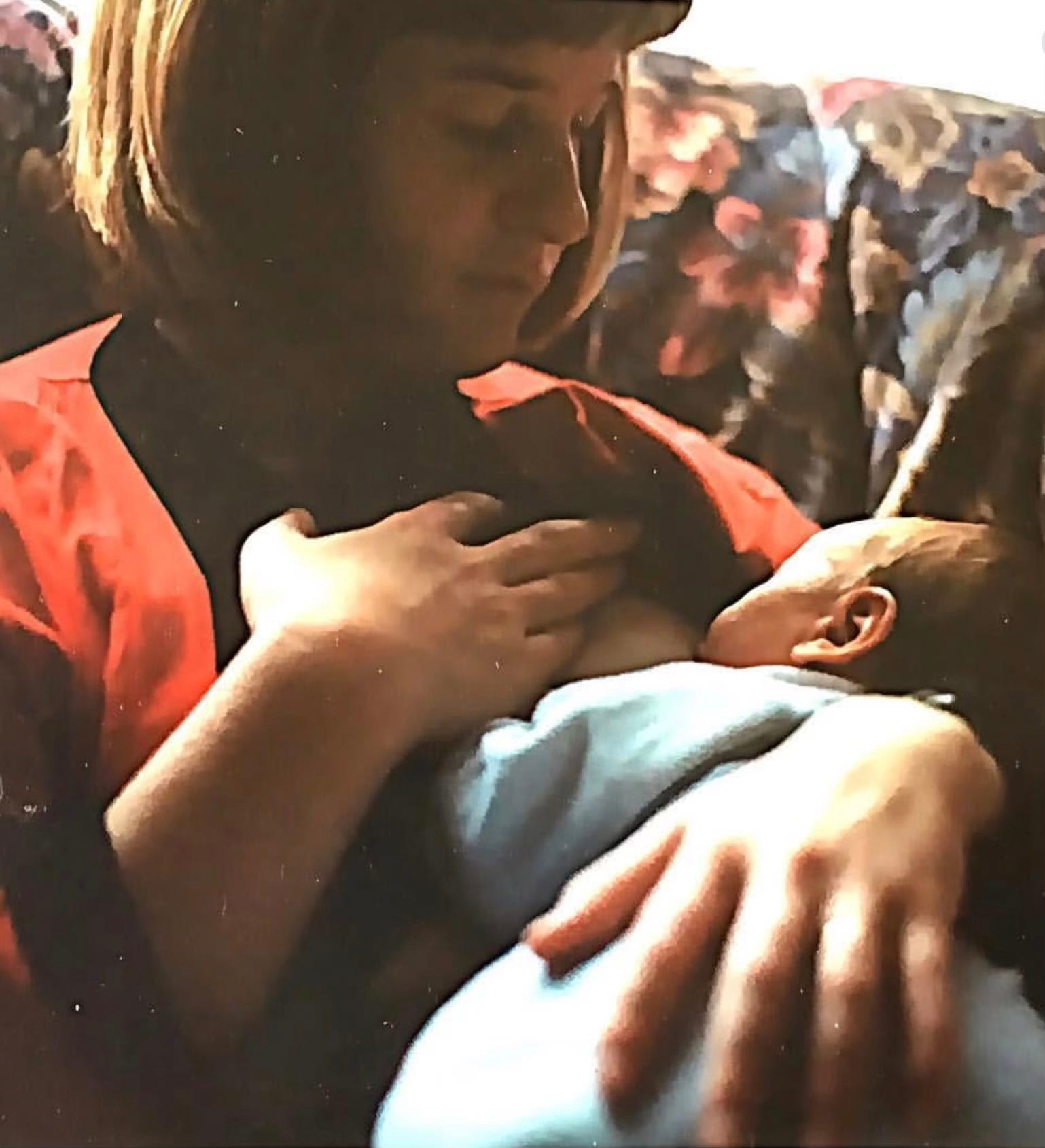
I went on to become a mother of four more children.
AI overview from Google:
Hospitals began to systematically offer keepsakes like hand and footprints and give parents a choice in funerals in the mid-1980s. Before this shift, medical professionals often removed stillborn babies without consulting families, and mothers were discouraged from holding their babies or arranging funerals. [1, 2, 3, 4]
The cultural and medical approach to early stillbirths and baby loss has undergone a major shift over the decades: [1, 2]
Before the 1980s: Babies were often buried in communal graves or with unrelated adults by the hospital. Parents were routinely denied the opportunity to see or hold their babies, and keepsakes were not provided. [1, 2, 3]
The mid-1980s: Advocacy groups (such as Sands) successfully campaigned for parents to be consulted about funerals and allowed to spend time with their babies. This is when collecting handprints, footprints, and locks of hair became standard practice. [1, 2, 3, 4, 5]
1992 (Legal Change): The legal definition of a stillbirth in the UK was changed from 28 weeks of gestation to 24 weeks. This meant babies born after 24 weeks received legal recognition and official registration. [1, 2]
2024 (Early Loss Recognition): In February 2024, the government in England launched official Baby Loss Certificates for parents who experience a loss before 24 weeks. This allows families to formally acknowledge their baby regardless of how early the pregnancy ended. [1]
You (21yr old, 63 yr old and everyone you were before and in between, and are yet to become) are all beautiful, valuable, and lovable dear Tracey.
I'm glad received my words - little vehicles of human connection - so well and I am grateful for your generousity in sharing your painful, delicate and couragious story with us.
There is a way in doing that, in traveling back in time and bringing the things you needed back then to the one(s) you were then and needed support and witnessing and care and love.
If my message could do that an little bit for you, I'm very happy it did. In case you would like to go deeper into any part of it, now or later, and you would like to have me accompanying you on that occasion, you are very welcome to DM me and we can talk about that with a little more calm and time.
But don't feel any obligation whatsoever. I just wanted to open up the possibility for you.
Sending love to you and all your loved ones, from Amsterdam.
🌸 Lijn
Dear Tracey,
Thank you for the love and the courage you offered here to us, to describe the tremendously lonely story of the coming into existence, the loss of life, and the birth you gave to your beautiful little daughter Alice Hannah.
I'm so terribly sorry that you and her father had to go through those heartbreaking emotional experiences all alone an unheld,
That should have never happened to you.
It should have never happen to anyone that way.
Reading what you went through, I wish I could travel back in time and come and find you there, already a few weeks before the 30th of June 1984.
I wish I could have just been with you in all the lonely moments you describe, from the moment you realised you hadn't felt her move, and the visit to the GP who was to afraid of their own emotions to be attuned to yours. I wish I could have visited your mother and explained to her that you really n deed her support now. I wish I could have come with you on the bus those times, just holding your hand and even taking you into my arms to just gently hold your grieving, sobbing body, in my accepting, calm and present arms. I wish I could have made sure that your boyfriend could have been with you, and that I could have stuck around to take care of the both of you. I wish I could have brought you the burgundy strawler, and brought you a beautiful and soft silken cloth for you to gently wrap your gorgeous, precious little Alice Hannah in, asleep with her little hand and beautiful little fingers next to her tiny face. And that I could have taken a loving family picture of her and you and your boyfriend together, and that we could have lit some beautiful candles then and that we would have taken you home, the three of you, so that you could have brought her into the half your - half her room, and that she could have met her grandparents and het aunt's and uncles. And that many, many foto's of her would have been taken, and that you and her father together could have prepared a beautiful ceremony, with all of her family and friends present, to cheer her on, to celebrate and be grateful for precious unique exisistence in the world, and for her modest and silent departure.
And then she would have had her very own welcome and farewell. She would have had a whole, worthy and fully witnessed funeral, with beautiful music and the voices of all around her, singing her recious little spirit into the air and onto another paralel world, where she could be welcomed and properly received and cared for.
I wish for you, her loving mom - whom she made a mother - that you will receive all the acknowledgement, care, love and support you long for, dear fellow-mom, and that Alice Hannah's beautiful being can be integrated in all openness and that her memory will be held and shared in you, in her family and in everyone in your lives who love you.
Hugs and big love to all of you.
Lijn, Amsterdam